

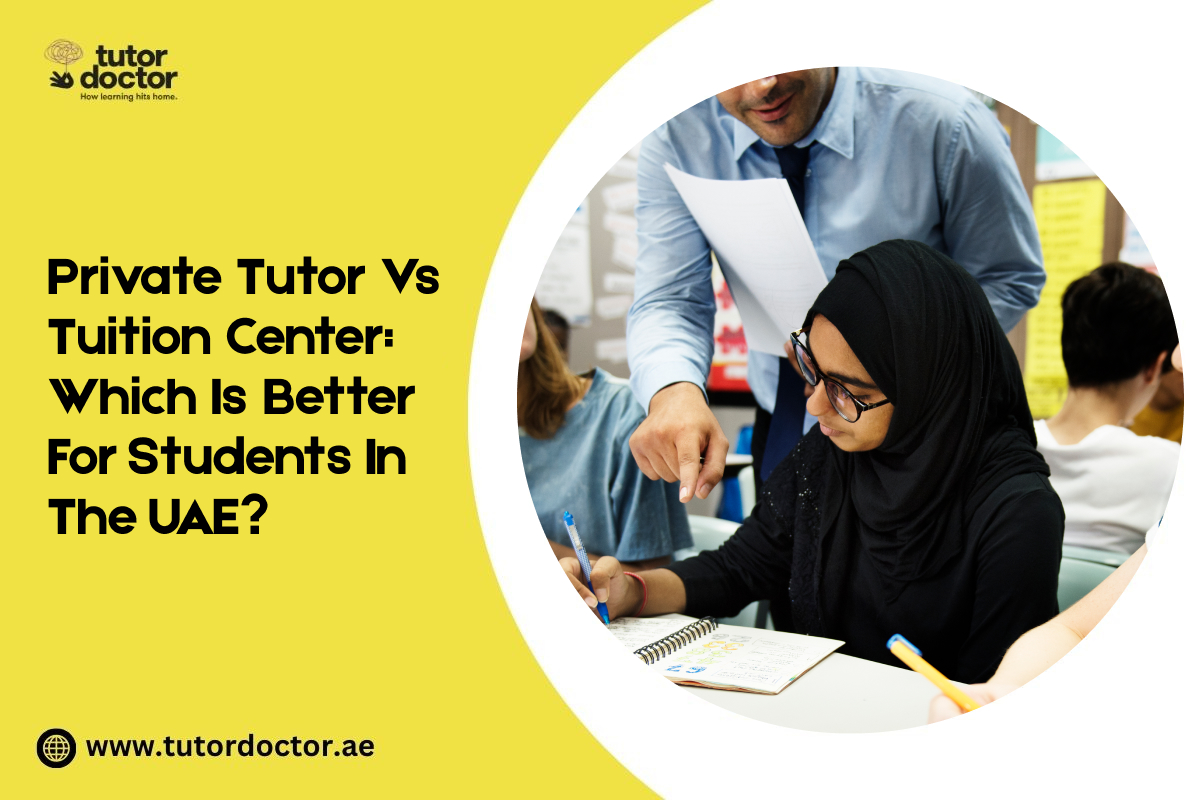
Choosing the right academic support can have a lasting impact on a student’s confidence, grades, and overall learning experience. Parents across the UAE often face an important question when their child needs extra help outside school. Should they hire a private tutor or enroll their child in a tuition center?
Both options aim to improve academic performance, but they provide very different learning experiences. The right choice depends on factors such as the student’s learning style, academic goals, school curriculum, schedule, and the level of personalized attention they require.
Families today have more educational options than ever before. Students studying the British, American, IB, CBSE, ICSE, or other international curricula all have unique learning needs. Many parents find that One-to-One Private Tutoring provides a personalized approach that focuses entirely on their child’s strengths, challenges, and pace of learning. Understanding the differences between private tutoring and tuition centers helps families make an informed decision that supports long-term academic success.
This guide compares both learning methods in detail, highlighting their advantages, limitations, costs, and the situations where each option works best.
Why Students Need Academic Support Outside School
Modern school curricula are becoming increasingly demanding. Teachers often have limited classroom time to explain complex topics while managing large groups of students with different learning abilities.
Students may seek additional academic support for many reasons, including:
- Difficulty understanding certain subjects.
- Preparation for major examinations.
- Improving overall grades.
- Building confidence.
- Catching up after missing lessons.
- Developing stronger study habits.
- Preparing for university admission tests.
Extra academic support allows students to strengthen their understanding before small learning gaps become larger challenges.
Understanding Private Tutoring
Private tutoring involves personalized instruction between one tutor and one student. Lessons are customized according to the student’s academic level, learning style, and educational goals.
Sessions may take place at home, online, or another agreed location. Unlike traditional classrooms, private tutoring allows every lesson to focus entirely on the individual learner.
Key Features of Private Tutoring
Private tutoring typically includes:
- Personalized lesson planning.
- Flexible scheduling.
- Individual attention.
- Customized learning pace.
- Regular progress monitoring.
- Targeted exam preparation.
- Immediate feedback.
This personalized approach helps students concentrate on the topics where they need the greatest support.
Understanding Tuition Centers
Tuition centers provide structured learning in small or medium-sized groups.
Students usually attend scheduled classes alongside others studying similar subjects or curricula. Lessons generally follow a fixed syllabus designed to support classroom learning.
What Tuition Centers Usually Offer
Most tuition centers provide:
- Group instruction.
- Fixed class schedules.
- Curriculum-based lessons.
- Regular assessments.
- Classroom discussions.
- Peer interaction.
Although many students benefit from collaborative learning, individual attention may be limited because instructors teach several students simultaneously.
Private Tutor vs Tuition Center: Major Differences
Choosing between these options requires understanding how they compare across several important factors.
Personalized Learning
Private tutoring offers complete personalization.
Tutors adapt every lesson according to the student’s current understanding, learning speed, strengths, and weaknesses.
If additional time is needed for algebra, essay writing, chemistry calculations, or reading comprehension, the tutor can adjust the lesson immediately. Tuition centers usually follow predetermined lesson plans designed for the entire class.
Students who learn more slowly or more quickly may find it difficult to receive instruction at their preferred pace.
Individual Attention
One of the biggest advantages of private tutoring is dedicated one-to-one instruction.
Students can ask unlimited questions without worrying about slowing down classmates.
Tutors also identify learning gaps more quickly because they observe every stage of the student’s thinking process.
In tuition centers, instructors divide their attention among multiple students.
Although questions are encouraged, lesson time must be shared across the entire class.
Flexibility
Busy families often appreciate flexible scheduling.
Private tutors can arrange lessons around:
- School hours.
- Extracurricular activities.
- Family commitments.
- Examination periods.
Rescheduling sessions is often much easier than changing fixed classroom timetables.
Tuition centers generally operate according to predetermined weekly schedules. Students must attend at the assigned times regardless of changing commitments.
Learning Pace
Every student learns differently.
Some understand new concepts immediately, while others require additional explanation and practice.
Private tutors adjust the pace continuously. Lessons move forward only after students fully understand each topic. Group classes usually progress according to the overall class schedule rather than individual readiness.
Student Confidence
Many students hesitate to ask questions in group settings because they worry about making mistakes.
Private tutoring creates a comfortable learning environment where students feel more confident discussing difficult topics.
Greater confidence often leads to:
- Better classroom participation.
- Increased motivation.
- Stronger academic performance.
- Greater independence.
Subject Coverage
Both private tutors and tuition centers support a wide range of subjects.
These commonly include:
- Mathematics.
- English.
- Science.
- Chemistry.
- Physics.
- Biology.
- Arabic.
- Business Studies.
- Economics.
- Computer Science.
Private tutors can also provide highly specialized assistance for university entrance examinations and international qualification programs.
Exam Preparation
Examination success requires more than understanding subject content.
Students also need effective revision strategies, time management, and familiarity with examination formats. Private tutors often create customized preparation plans that include:
Diagnostic Assessments
Tutors first identify strengths and weaknesses before planning revision.
Past Paper Practice
Students gain experience with actual examination questions while improving confidence.
Time Management
Tutors teach students how to allocate time effectively during examinations.
Individual Feedback
Every mistake becomes an opportunity for improvement through detailed explanation.
Tuition centers may also provide exam preparation, but personalized feedback is generally less detailed because instructors work with larger groups.
Which Students Benefit Most from Private Tutoring?
Private tutoring is particularly beneficial for students who:
- Need personalized instruction.
- Have specific learning gaps.
- We are preparing for important examinations.
- Require flexible scheduling.
- Learn better through individual attention.
- Need confidence building.
- Prefer learning without classroom pressure.
Students with ambitious academic goals often benefit significantly from individualized learning plans.
Which Students Benefit Most from Tuition Centers?
Group learning environments may be suitable for students who:
- Enjoy learning with classmates.
- Prefer structured classroom settings.
- Need general subject revision.
- Are comfortable following fixed schedules.
- Benefit from peer discussions.
- Enjoy collaborative learning activities.
For some learners, interacting with classmates can make lessons more engaging and enjoyable.
Online Learning Options
Both private tutors and tuition centers now offer online instruction.
Modern digital learning platforms include:
- Interactive whiteboards.
- Screen sharing.
- Digital worksheets.
- Recorded lessons.
- Online assessments.
Online learning provides flexibility while maintaining high academic standards when delivered by experienced educators.
Cost Comparison Between Private Tutors and Tuition Centers
Cost is one of the first factors parents consider when choosing academic support. While tuition centers may appear more affordable because classes are shared among several students, the overall value depends on the level of individual attention and learning outcomes.
Private tutoring often costs more per session because students receive personalized instruction tailored to their academic needs. Every minute of the lesson focuses on one learner, allowing tutors to explain difficult topics, answer questions immediately, and adjust teaching methods in real time.
Tuition centers usually charge lower fees per student since lessons are delivered to groups. Although this can reduce overall costs, students who require additional explanation outside class may still need extra support.
Instead of comparing prices alone, parents should evaluate the long-term academic value each option provides.
Support for Different School Curricula
Students in the UAE study under a variety of international education systems. A good tutoring solution should align with the curriculum taught at school.
Private tutors often provide customized support for:
- British Curriculum.
- GCSE.
- IGCSE.
- A Levels.
- IB Diploma Programme.
- American Curriculum.
- CBSE.
- ICSE.
- UAE National Curriculum.
Because lessons are personalized, tutors can focus on school-specific learning objectives, assessment methods, and examination techniques.
Many tuition centers also support multiple curricula, but lessons are usually designed for groups following similar academic programs.
Flexibility During Examination Season
Academic priorities often change throughout the school year.
Students may need additional sessions before:
- Midterm examinations.
- Final examinations.
- Entrance tests.
- University admission assessments.
- Scholarship examinations.
Private tutoring offers greater flexibility by increasing or reducing lesson frequency according to academic demands.
Tuition centers generally maintain fixed schedules throughout the term, making it more difficult to adjust lesson frequency.
Communication With Parents
Regular communication helps parents understand their child’s academic progress.
Private tutors often provide detailed updates about:
- Learning progress.
- Strengths.
- Areas requiring improvement.
- Homework performance.
- Examination readiness.
- Future learning goals.
This ongoing feedback allows parents to stay actively involved in their child’s education.
Although tuition centers may provide periodic reports, personalized updates are usually less detailed because instructors manage multiple students.
Building Independent Learners
The best academic support goes beyond improving examination scores.
Private tutors help students develop valuable lifelong learning skills such as:
- Critical thinking.
- Problem solving.
- Time management.
- Organization.
- Independent study habits.
- Academic confidence.
As students become more confident, they rely less on constant guidance and become more capable of managing future academic challenges independently.
Common Myths About Private Tutoring
Many parents hesitate because of common misconceptions surrounding private tutoring.
Myth One: Private Tutoring Is Only for Struggling Students
Students at every academic level benefit from personalized instruction.
High-achieving learners often use tutoring to prepare for competitive examinations, strengthen advanced concepts, or maintain excellent academic performance.
Myth Two: Tuition Centers Always Produce Better Results
Academic success depends more on teaching quality, student commitment, and personalized support than class size.
Some students thrive in groups, while others perform much better through one-to-one instruction.
Myth Three: Private Tutoring Is Too Expensive
Although hourly rates may be higher, personalized lessons often produce faster progress by focusing only on the student’s individual learning needs.
Many families find this approach provides better long-term value.
How Parents Can Choose the Right Option
Every student has unique academic needs.
Before making a decision, parents should consider the following questions:
- Does my child need individual attention?
- Is my child confident asking questions in a group?
- Does my child have specific learning gaps?
- How flexible does our family schedule need to be?
- Is examination preparation the primary goal?
- Which learning environment motivates my child most?
Answering these questions helps identify the option that best supports the student’s success.
Signs Your Child May Benefit From Private Tutoring
Private tutoring may be the better choice if your child:
- Has declining grades.
- Feels overwhelmed by classroom lessons.
- Struggles with confidence.
- Needs curriculum-specific support.
- Learns at a different pace than classmates.
- Is preparing for important examinations.
- Requires flexible lesson scheduling.
Early academic support often prevents small challenges from becoming larger obstacles later.
Why Many Families Prefer Personalized Tutoring
One-to-one instruction creates an environment where students feel comfortable asking questions, making mistakes, and developing confidence without classroom pressure.
Lessons move at the student’s pace rather than following a fixed timetable. Tutors can revisit challenging topics, adjust teaching methods instantly, and celebrate progress along the way.
This personalized experience often results in a stronger understanding, improved motivation, and more consistent academic growth.
Why Families Choose Tutordoctor
Parents want more than homework support. They want an educational partner who understands their child’s goals and provides personalized guidance throughout the learning journey.
Many families choose Tutordoctor because every tutoring program begins with understanding the student’s strengths, learning style, academic challenges, and long-term objectives. Individualized lesson plans, experienced tutors, and ongoing progress monitoring help students build confidence while improving their performance across a wide range of subjects and international curricula.
Frequently Asked Questions
Is a private tutor better than a tuition center?
The best choice depends on the student’s learning style and academic needs. Students who require personalized attention often benefit more from private tutoring, while those who enjoy collaborative learning may prefer tuition centers.
Are private tutors available for different school curricula in the UAE?
Yes. Many experienced tutors provide support for British, American, IB, GCSE, IGCSE, A Levels, CBSE, ICSE, and other international curricula.
Can private tutoring improve examination results?
Personalized instruction helps students strengthen weak areas, practice examination techniques, and develop greater confidence, which often leads to improved academic performance.
Is online private tutoring effective?
Yes. Interactive online lessons can be highly effective when delivered by experienced tutors using structured teaching methods and digital learning tools.
How often should students attend tutoring sessions?
The ideal schedule depends on academic goals and current performance. Many students benefit from one or two sessions each week, with additional lessons during examination periods.
Final Thoughts
Choosing between a private tutor and a tuition center is an important decision that should be based on your child’s individual learning needs rather than cost alone. While tuition centers offer structured group learning and opportunities for peer interaction, private tutoring provides a personalized approach that focuses entirely on one student’s academic progress.
Students who need flexible scheduling, targeted support, curriculum-specific guidance, or greater confidence often achieve stronger results through one-to-one tutoring. Personalized instruction allows tutors to identify learning gaps, adapt teaching methods, and provide immediate feedback that may not always be possible in a classroom environment.
There is no single solution that suits every learner. Some students perform well in group settings, while others make greater progress through individualized lessons. By understanding your child’s strengths, learning style, and academic goals, you can choose the option that supports lasting success both inside and outside the classroom.